.jpg)
What is ADHD? ¿Qué es el TDAH?
- info074147
- Jul 9, 2025
- 3 min read
Updated: Dec 5, 2025
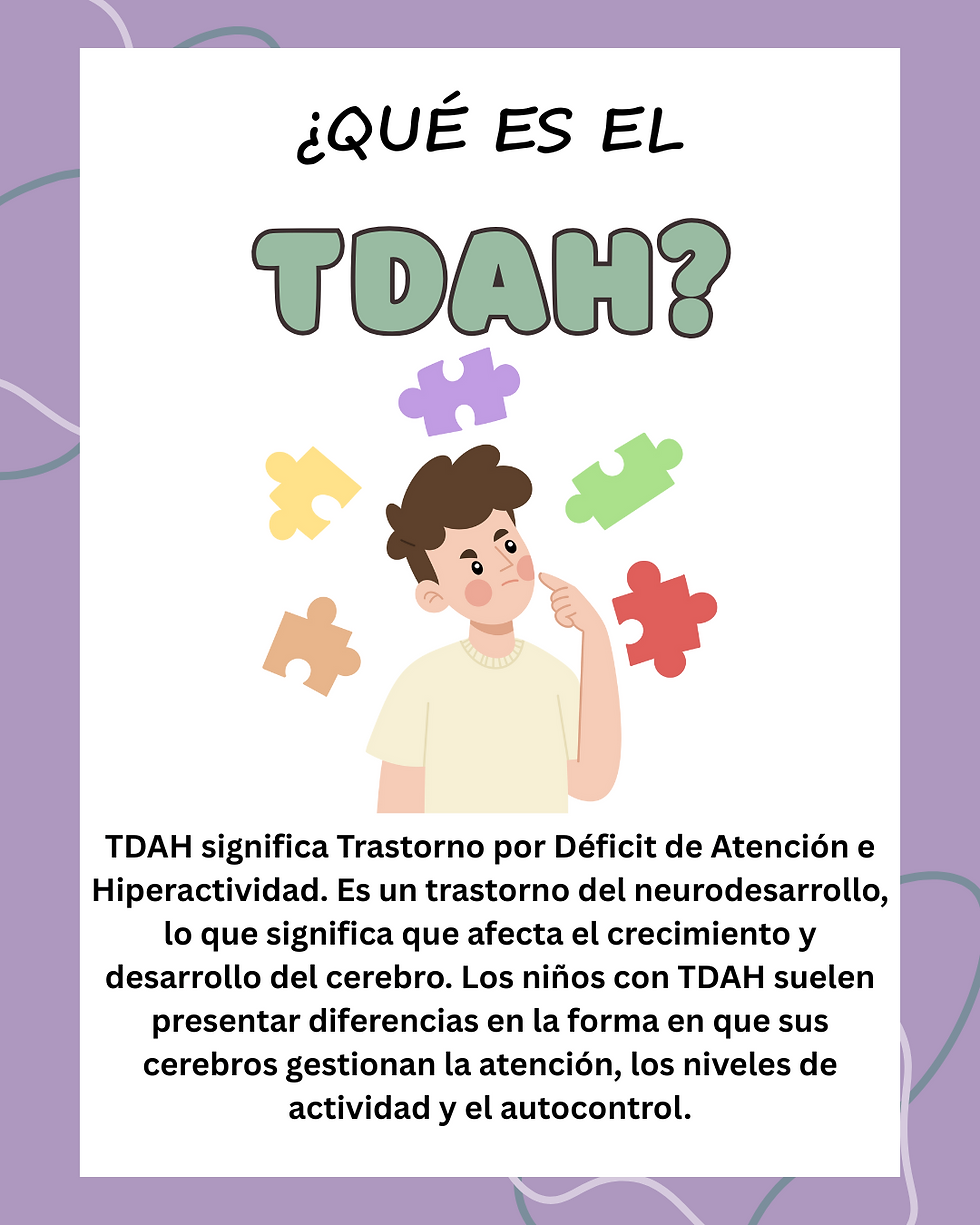
Attention-Deficit/Hyperactivity Disorder (ADHD) is a common neurodevelopmental condition that affects how the brain develops and functions. Children with ADHD often experience challenges with attention, hyperactivity, and self-control—but with the right support, they can thrive.
El Trastorno por Déficit de Atención e Hiperactividad (TDAH) es una condición del neurodesarrollo que afecta cómo se desarrolla y funciona el cerebro. Los niños con TDAH a menudo enfrentan desafíos relacionados con la atención, la hiperactividad y el autocontrol—pero con el apoyo adecuado, pueden prosperar.
🔍 Key Signs of ADHD -- Señales Clave del TDAH
Children with ADHD may show challenges in one or more of these three areas: Los niños con TDAH pueden mostrar dificultades en una o más de estas tres áreas:
Inattention / Falta de atención– Trouble focusing, following instructions, staying organized, or listening carefully.
Dificultad para concentrarse, seguir instrucciones, mantenerse organizados o escuchar con atención.
Hyperactivity / Hiperactividad– Constant movement, fidgeting, talking excessively.
Están en constante movimiento, se inquietan o hablan mucho.
Impulsivity / Impulsividad– Acting without thinking, interrupting others, difficulty with self-control.
Actúan sin pensar, interrumpen con frecuencia o tienen dificultad para controlarse.
Some children show mostly inattentive symptoms, others are more hyperactive-impulsive, and many have a combination of both.
Algunos niños presentan principalmente síntomas de inatención, otros son más hiperactivos-impulsivos, y muchos tienen una combinación de ambos.
🚫 What ADHD Is Not -- Lo Que el TDAH No Es
ADHD is not caused by bad parenting or lack of discipline.
El TDAH no es causado por una mala crianza o falta de disciplina.
ADHD does not mean a child is lazy or unmotivated.
El TDAH no significa que el niño sea perezoso o poco motivado.
ADHD is not related to intelligence—many children with ADHD are bright, talented, and creative.
El TDAH no está relacionado con la inteligencia—muchos niños con TDAH son brillantes, talentosos y creativos.
🎒 How It Affects Daily Life -- Cómo Afecta la Vida Diaria
ADHD can impact many areas of a child’s life: El TDAH puede afectar muchas áreas de la vida de un niño:
They may forget homework, lose items often, or struggle to sit still in class.
Pueden olvidar tareas, perder objetos frecuentemente o tener dificultades para quedarse quietos en clase.
They might have trouble with friendships, managing emotions, or following routines at home.
Pueden tener dificultades para hacer amigos, manejar sus emociones o seguir rutinas en casa.
🌈 The Good News -- La Buena Noticia
ADHD is treatable. With the right combination of support, children with ADHD can succeed at school, at home, and in their relationships. Support may include:
✔️ Behavior strategies ✔️ School accommodations ✔️ Routines at home ✔️ Medication, when appropriate
El TDAH es tratable. Con el apoyo adecuado, los niños con TDAH pueden tener éxito en la escuela, en casa y en sus relaciones. El apoyo puede incluir:
✔️ Estrategias de comportamiento ✔️ Adaptaciones escolares ✔️ Rutinas en casa ✔️ Medicación, cuando sea apropiada
💛 A Final Note to Parents -- Un Mensaje Final para Padres
Understanding ADHD is the first step. As a parent, your support, patience, and advocacy are powerful tools to help your child grow with confidence.
Entender el TDAH es el primer paso. Como padre o madre, su apoyo, paciencia y defensa son herramientas poderosas para ayudar a su hijo(a) a crecer con confianza.
By: Dr. Priscilla Armstrong + Diddiery Santana



Comments